
Credit as a proportion of GDP is low in India by international standards.

Indian Economy poised for growth, say experts.
Some see CRR cut as tight liquidity continues.
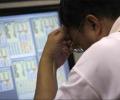
Sensex has shed over 150 points in afternoon trade.

As many as 34 new drugs were added to and 26 dropped from an updated list of essential medicines on Tuesday, with the government saying this will reduce "patients' out-of-pocket expenditure". The National List of Essential Medicines (NLEM 2022) has 384 drugs, up from 376 in 2015. "Drafting this list is a lengthy process, and around 350 experts from across India have held over 140 consultation meetings to draft the NLEM 2022," Union Health Minister Mansukh Mandaviya said.

The RBI's next policy review is set for Sept. 29.
The major task in emerging economies now is how best to tackle high or rising food prices.
The RBI's big decision is not how much to ease but whether to monetise the fiscal deficit.
While retail inflation soared to a nine-month high of 11.24 per cent in November, the index based on wholesale prices zoomed to a 14-month high of 7.52 per cent last month.
Inflation fell to 4.29 per cent for the week ended February 25 from 4.34 per cent in the previous week, mainly due to decline in prices of essential food articles and non-food items.

The index has posted below the 50 mark, which marks contraction, for the third consecutive month.
The Sensex ended higher by 138 points at 19,367 and the 50-share Nifty advanced 43 points to close at 5,742.
Tata Motors was the top gainer among the Sensex stocks.
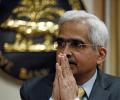
RBI Governor Shaktikanta Das on Friday said the government and the central bank are in discussion with South Asian countries to have cross-border trade in rupee. He also said the central bank digital currency (CBDC) is in trial phase and the RBI is moving very carefully and cautiously on digital rupee launch. After the successful launch of the wholesale pilot, the Reserve Bank of India (RBI) on December 1, last year, began its retail CBDC pilot project.
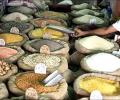
The RBI had lowered policy rates by 0.50 per cent between January-March to prop up economic growth.
The worst of recession could coincide with the run-up to the elections.

Five per cent growth is disappointing but only after having reached nine per cent. However, it is still not all that bad, says Andrew Michael Spence.
Professional forecasters have added to Reserve Bank of India Governor Duvvurri Subbarao's dilemma on timing the exit from an accommodative monetary policy stance.
High vegetable prices were seen as one of the key reasons for the debacle the ruling Congress party faced in four of the five Assembly elections concluded last month.
India's wholesale price index, the inflation measure most widely followed by policy-makers and investors, does not need another revision after the release of the final number eight weeks after the provisional numbers, as more than three-fourths data are collected by then, Pronab Sen, chief statistician, Ministry of Statistics has said.

Essential items are 65 per cent costlier than last year; traders blame it on higher MSP, confusion in govt.
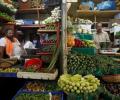
Not just onion, retail prices of potato and other vegetables have also shot up in the national capital on Monday as recent winter rainfall has damaged some of the crops. Milk and butter prices have also gone up. Even cooking oil prices, especially of mustard oil, have increased by Rs 15/kg litre.
Tea prices in the country could go up between Rs 10-20 a kilogram if the high level of value added tax (VAT) proposed to be levied on the commodity is not reversed, the industry has warned.
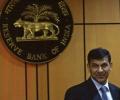
After two rate hikes in less than six weeks aimed at curbing inflation, RBI Governor Raghuam Rajan on Wednesday said the central bank may be done with interest rate increases as their impact on the economy is assessed.
The repo rate has been unchanged since January, when the RBI increased it by a quarter percentage point.
Tata Motors was the top Sensex loser, down nearly 5%
.jpg)
The rupee resumed slightly lower at 62.05 per dollar as against the last weekend's level of 62.04 at the Interbank Foreign Exchange market. It recovered to 61.88 per dollar before quoting 61.93 at 1045 hours.
While existing investments pipelines are on course, newer projects, which are at conceptual stage, may be affected; companies are concerned that high inflation (the wholesale price index is above 12.6 per cent, a 16-year high) and high interest rates would dampen consumer demand growth, Confederation of Indian Industry President K V Kamath said after a meeting of industry leaders with Finance Minister P Chidambaram.
While bank credit growth seems to be showing signs of revival, deposits could soon emerge as the new area of concern for bankers.
The double whammy saw the Bombay Stock Exchange's benchmark Sensex fall 3 per cent or 456.39 to close at 13,469.85 even as global rating agency Standard and Poor's suggested it might lower India's sovereign rating of BBB- (investment-grade status) due to the country's deteriorating credit profile over the last 12 months.

Retail inflation was at a 25-month low of 8.1 per cent in February.

There are glaring anomalies with Indian data and that could lead to wrong policy prescriptions.
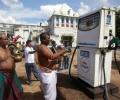
The change from wholesale to retail inflation as an anchor means that the weightage of diesel in inflation has decreased

'Revision of the base year for both CPI and GDP are long overdue.' 'The basic data that went into the 2011-2012 series were mainly from surveys done in 2011 or earlier.' 'We have since seen the emergence of new sectors like platform-based work and online marketing.' 'The employment surveys and the consumption surveys need to reflect these adequately.'
The 30-share Sensitive Index or Sensex ended the weak in the negative region. It tanked 620 points to close at 13,802, a loss of 4.3% compared to Thursday's close.

Food inflation was 7.79 per cent last month, higher than a revised 7.47 per cent in May

The inter-meeting rate cut by the Reserve Bank of India (RBI) indicates a shift in its monetary policy stance, the finance ministry's chief economic adviser Arvind Subramanian said on Thursday.

RBI awaits fiscal stance, inflation to cool off to decide on rates.
 © 2026 Rediff.com - Advertise with us - Disclaimer - Privacy Policy - Sitemap - Feedback - About us - Terms of use - Grievances